Updated 07:20
Titan M3 puts post-quantum signatures in the Pixel boot chain, and names no algorithm
What Google documents about Pixel 11 boot verification, and the three details it leaves out.
What the launch says
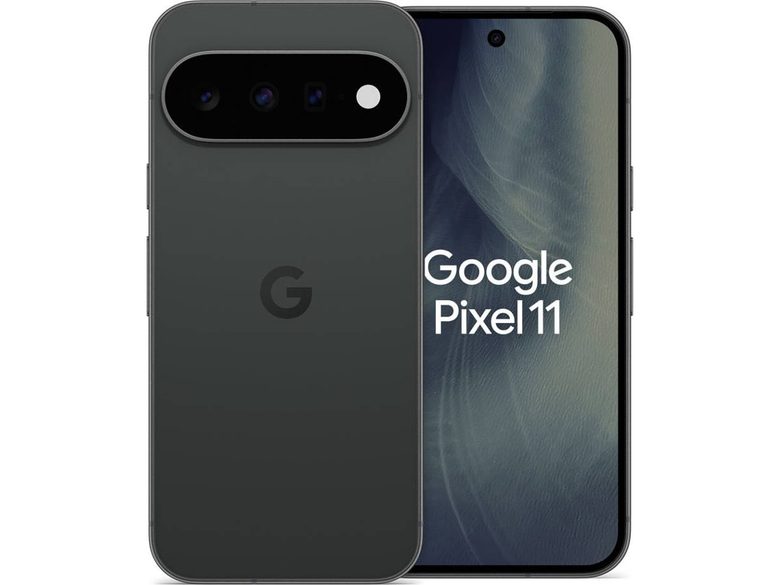
Google announced the Pixel 11, Pixel 11 Pro and Pixel 11 Pro XL on 2026-08-12, "available for pre-order today starting at $899, $1099, and $1299," with all three "on shelves at the Google Store and our retail partners on August 20." One sentence in the announcement is a hardware claim rather than a feature claim:
Our new Titan M3 security chip and custom Tensor G6 processor seamlessly integrate to form our most robust, proactive defense system yet, bringing post-quantum cryptography to secure boot on your device.
Google, "The Pixel 11 series: Your most personal Pixel yet"
The spec sheet is more precise than the blog post. Under Processor, the Pixel 11 lists "Google Tensor G6" and a "Titan M3 security coprocessor." Under Security, it lists "Multi-layer hardware security: Google Tensor G6 with quantum-safe secure boot in hardware, Tensor security core, certified Titan M3 security chip, and Trusty (Trusted Execution Environment)." Elsewhere on the same page: "Launched with Android 17," and "7 years of OS, security, and Pixel Drop updates."
That combination — quantum-safe boot verification in hardware, on a device that ships with Android 17 — is what makes the claim checkable, because Google published the algorithm-level detail five months ago against Android 17, not against a phone.
Where the algorithm is actually named
Neither the Pixel 11 announcement nor its spec page names a cipher. The Android security blog does. In a post dated 2026-03-25, Google wrote that "Android 17 introduces two major post-quantum cryptographic (PQC) upgrades," the first being that "The AVB library is integrating the Module-Lattice-Based Digital Signature Algorithm (ML-DSA). This provides quantum-resistant digital signatures, ensuring the software loaded during the boot sequence remains highly resistant to unauthorized modification."
AVB is Android Verified Boot — the chain that checks each stage's signature before handing off. ML-DSA is the NIST lattice signature standard, and swapping it into that chain is not a drop-in: signatures and public keys are far larger than the elliptic-curve ones they join or replace, and every byte has to be verified by code running before the OS exists. Google says as much about the adjacent work in the trusted execution environment: "Implementing lattice-based cryptography, which requires significantly larger key sizes and memory footprints than classical elliptic curve cryptography, within the severely resource-constrained Trusted Execution Environment (TEE), represents a major engineering achievement."
The same post says Android 17 "updates Android Keystore to natively support ML-DSA," with "The SDK exposes both ML-DSA-65, and ML-DSA-87," and that Google Play "will let developers automatically generate 'hybrid' signature blocks that combine classical and PQC keys." So the developer-facing half of the transition is specified down to the parameter set. The boot-chain half, on shipping hardware, is not.
What Google has not published
Three things are missing from the primary material, and each matters to anyone assessing the claim rather than repeating it.
First, the parameter set. Keystore's ML-DSA-65 and ML-DSA-87 are named; the AVB signature parameters on a Pixel 11 are not, in any Google document read for this story.
Second, hybrid or not. Google explicitly describes app signing as hybrid — classical plus PQC in one blob — but says nothing equivalent about the boot chain. Whether Pixel 11 boot images carry an ML-DSA signature alongside a classical one, or instead of it, changes what an attacker would have to break, and Google's own pages do not say.
Third, "certified." The spec sheet's phrase is "certified Titan M3 security chip." It names no scheme, no assurance level and no certificate. Titan M2's certification history is public elsewhere; M3's is an unqualified adjective on a store page.
None of that makes the claim wrong. It makes it a claim with a documented middle and an undocumented root — the algorithm is public, the OS integration is public, and the specific thing your $899 phone does at power-on is, for now, the part you take on trust.
Primary sources: The Pixel 11 series: Your most personal Pixel yet, Google Pixel 11 tech specs, Security for the Quantum Era: Implementing Post-Quantum Cryptography in Android, read 2026-08-14.